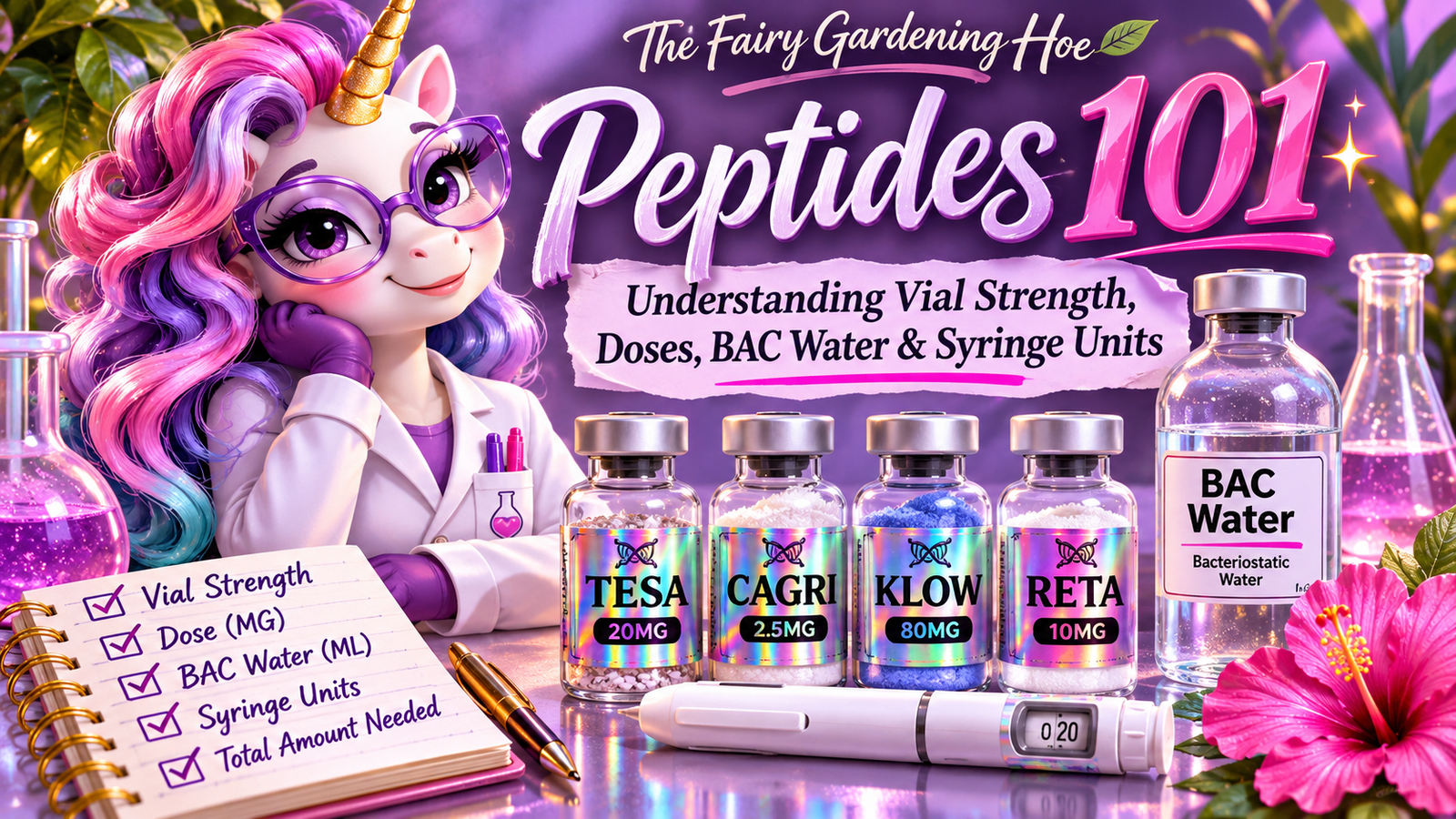
If you’re new to learning about peptides, the numbers can get confusing fast. One person is talking about a 10 mg vial, somebody else is saying they “pin 20 units,” and then BAC water gets thrown into the conversation. Now everybody is talking about different measurements as if they mean the same thing. They don’t!
This is something I had to learn myself. Once I understood the difference between how much peptide is in the vial, how much is in one dose, and how much liquid is being measured, the calculations started making a lot more sense.
So I’m breaking it down as simply as I can. And because we can make learning a little cute, we’re using our imaginary research unicorn to walk through the examples. 🦄
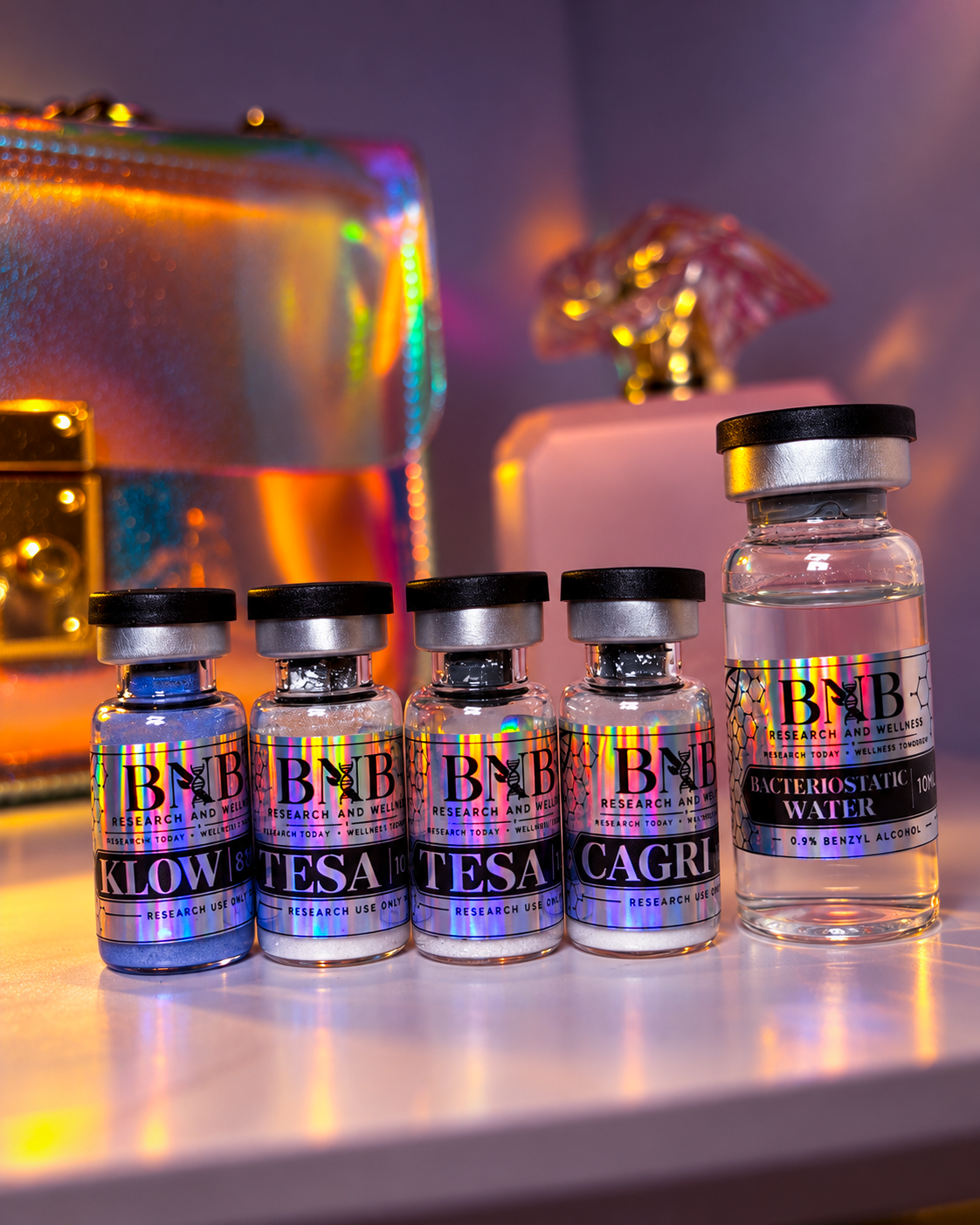
Before You Choose a Vial: Understand Your Research Plan
Before comparing vial sizes, you need to understand the research protocol. That sounds more complicated than it is.
A research protocol is simply the plan for how something is being studied. In our made-up example, it tells us the amount used each time, how often it’s used, and how long the study lasts. Some protocols have a set duration (sometimes called a cycle), while others include different phases. These are not the same thing as personal dosing instructions.
- Dose (mg): How many milligrams are included in one administration or “pin” (injection)?
- Frequency: How often does that happen: daily, weekly, or on another schedule?
- Duration: How long is the period being studied?
Let’s Do Some Unicorn Math 🦄

Say our imaginary unicorn has a purely hypothetical research plan that uses 2 mg once per week for 5 weeks.
2 mg × 5 administrations = 10 mg total.
Now imagine the same fictional study lasted eight weeks instead:
2 mg × 8 administrations = 16 mg total.
Notice what changed: not the amount per administration, but how much peptide the whole plan requires.
A single 10 mg vial contains less than the 16 mg total in that second example. Two 10 mg vials contain 20 mg altogether. This is why you compare the total amount needed with the amount supplied by the vial or vials, rather than choosing a vial based only on its label or price.
The calculations above show theoretical quantity, not a recommendation to use a particular peptide or to follow this schedule. Stability after preparation, product quality, and other losses can also affect what is actually usable.
1. Vial Strength (mg): How Much Peptide Is in the Entire Vial?
Vial strength tells you the total labeled amount of peptide in the vial.
For example, a vial labeled 10 mg is labeled as containing 10 mg total. That does not mean every injection from that vial is 10 mg.
Think of the vial as your whole supply. A 30 mg vial contains three times the total labeled peptide amount of a 10 mg vial, assuming both labels are accurate. That does not automatically make the peptide itself more potent or mean each administration is larger.
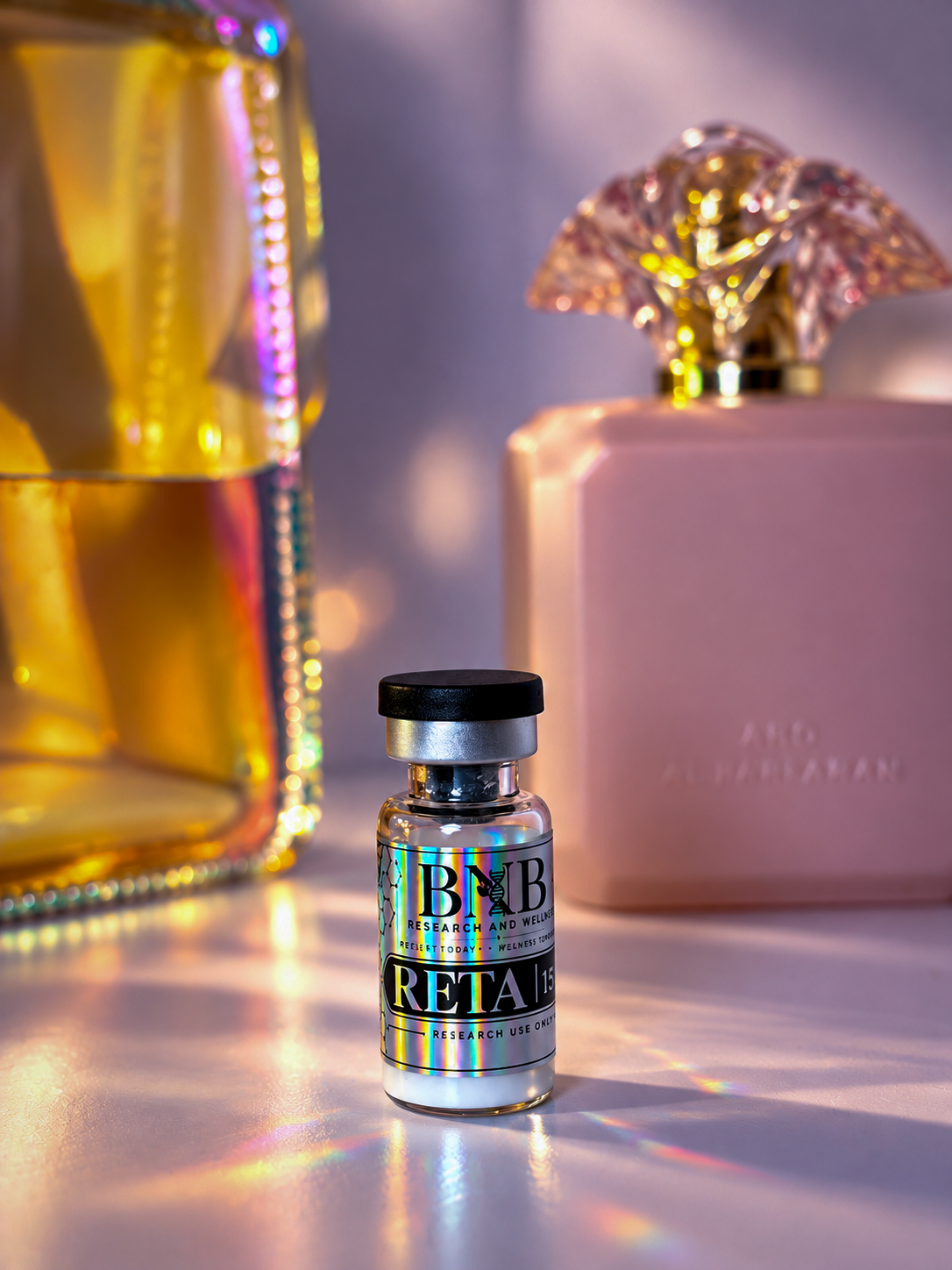
2. Dose (mg): How Much Peptide Is in One Pin?
A dose is the amount of peptide used at one time, measured in milligrams (mg). You may hear someone call an injection a “pin.” We’ll use that term here because it comes up a lot in peptide discussions.
You might also see doses measured in micrograms (mcg). Don’t let that throw you off! There are 1,000 mcg in 1 mg, so 500 mcg is the same as 0.5 mg.
To keep the math simple, imagine a 10 mg vial being divided into 2 mg portions. This is just a numbers example, not a dose recommendation for any peptide.
- After portion 1: 2 mg used, 8 mg remaining.
- After portion 2: 4 mg used altogether, 6 mg remaining.
- After portion 3: 6 mg used altogether, 4 mg remaining.
- After portion 4: 8 mg used altogether, 2 mg remaining.
- After portion 5: 10 mg used altogether, 0 mg remaining.
That is five theoretical 2 mg portions from a 10 mg total. The actual dose for any particular medication or study is a separate question. A bigger vial simply contains more total material; it does not set the dose.
3. BAC Water (mL): Why the Amount Added Changes Concentration
BAC water is short for bacteriostatic water. It is a sterile water product containing a preservative, and it may be used as a diluent when a particular product’s preparation instructions call for it. It is not automatically the right diluent for every peptide.
When you hear someone talk about reconstituting a peptide, they’re simply talking about adding a suitable liquid to freeze-dried powder to make a solution.
The important part for our math lesson is this: the amount of liquid changes the concentration, but it doesn’t change the total amount of peptide.
Let’s use the same imaginary 10 mg vial in two different math examples:
- Example A: A 10 mg vial plus 1 mL of BAC water gives approximately 10 mg per mL (10 mg/mL).
- Example B: A 10 mg vial plus 2 mL of BAC water gives approximately 5 mg per mL (5 mg/mL).
Both examples still start with 10 mg of peptide in total. One just has more peptide in each mL because it has less liquid.
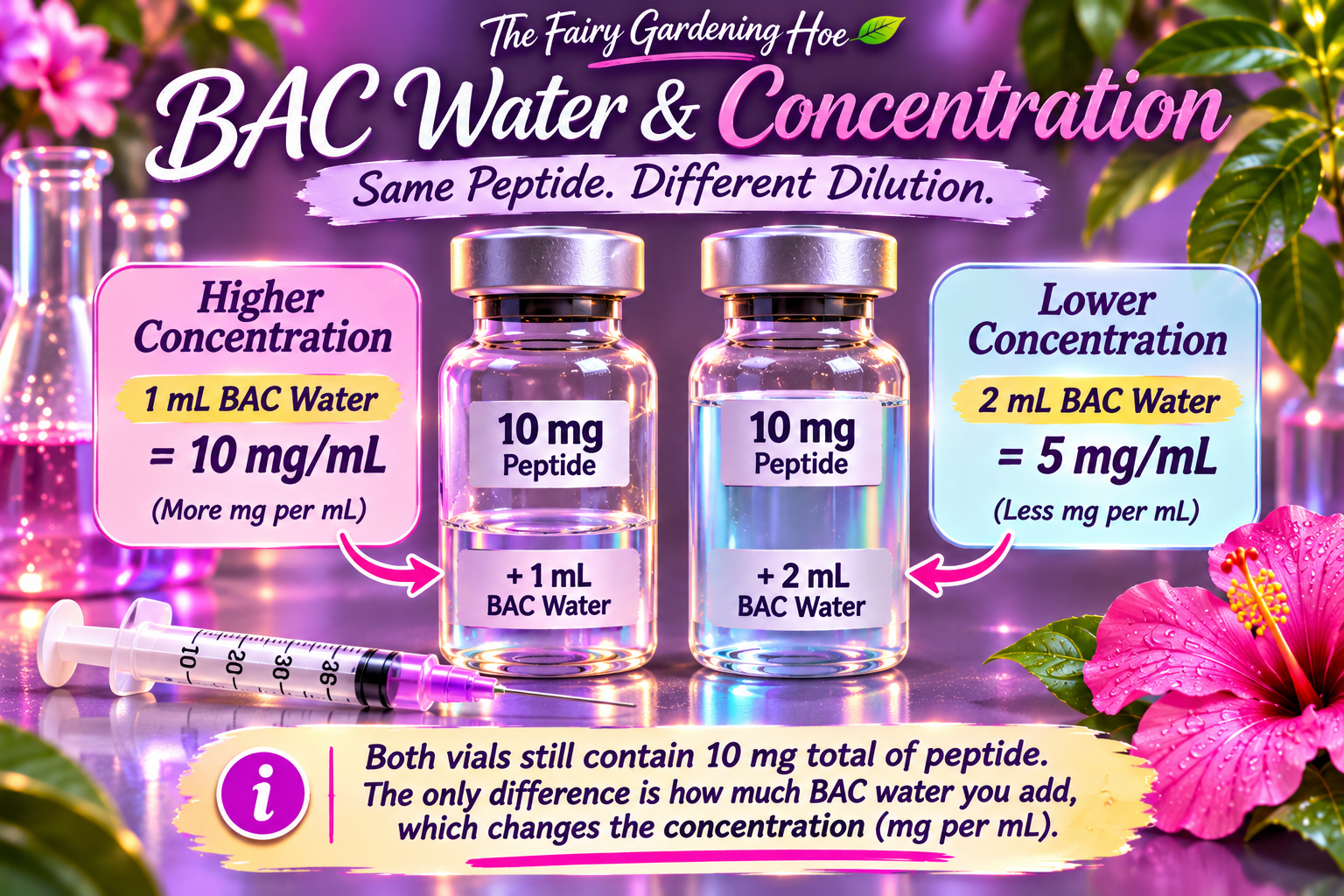
Less liquid = higher concentration. More liquid = lower concentration. That does not mean adding less water makes the peptide itself more powerful. It just changes how much of it is present per mL.
These simplified examples use the added water volume as approximately the final solution volume for easy arithmetic. Actual product preparation and final volume can differ, so the graphic is an illustration of concentration, not a mixing instruction.
4. Syringe Units: Why “I Pin 20 Units” Isn’t Enough Information
This might be the most important distinction in the entire article.
Syringe units are markings used to measure liquid volume. They are not automatically the milligrams of peptide in the liquid.
On a U-100 insulin syringe, 100 units corresponds to 1 mL. That means 20 units corresponds to 0.2 mL. A U-100 syringe can have a 30-, 50-, or 100-unit capacity; the “U-100” calibration is different from the syringe’s maximum capacity.
Now, let’s connect that to the BAC water examples from the previous section:
- Example A: A 10 mg vial with 1 mL BAC water added gives an approximate concentration of 10 mg/mL. In this mathematical example, 20 U-100 units (0.2 mL) contains 2 mg.
- Example B: A 10 mg vial with 2 mL BAC water added gives an approximate concentration of 5 mg/mL. That same 20 U-100 units (0.2 mL) contains 1 mg.
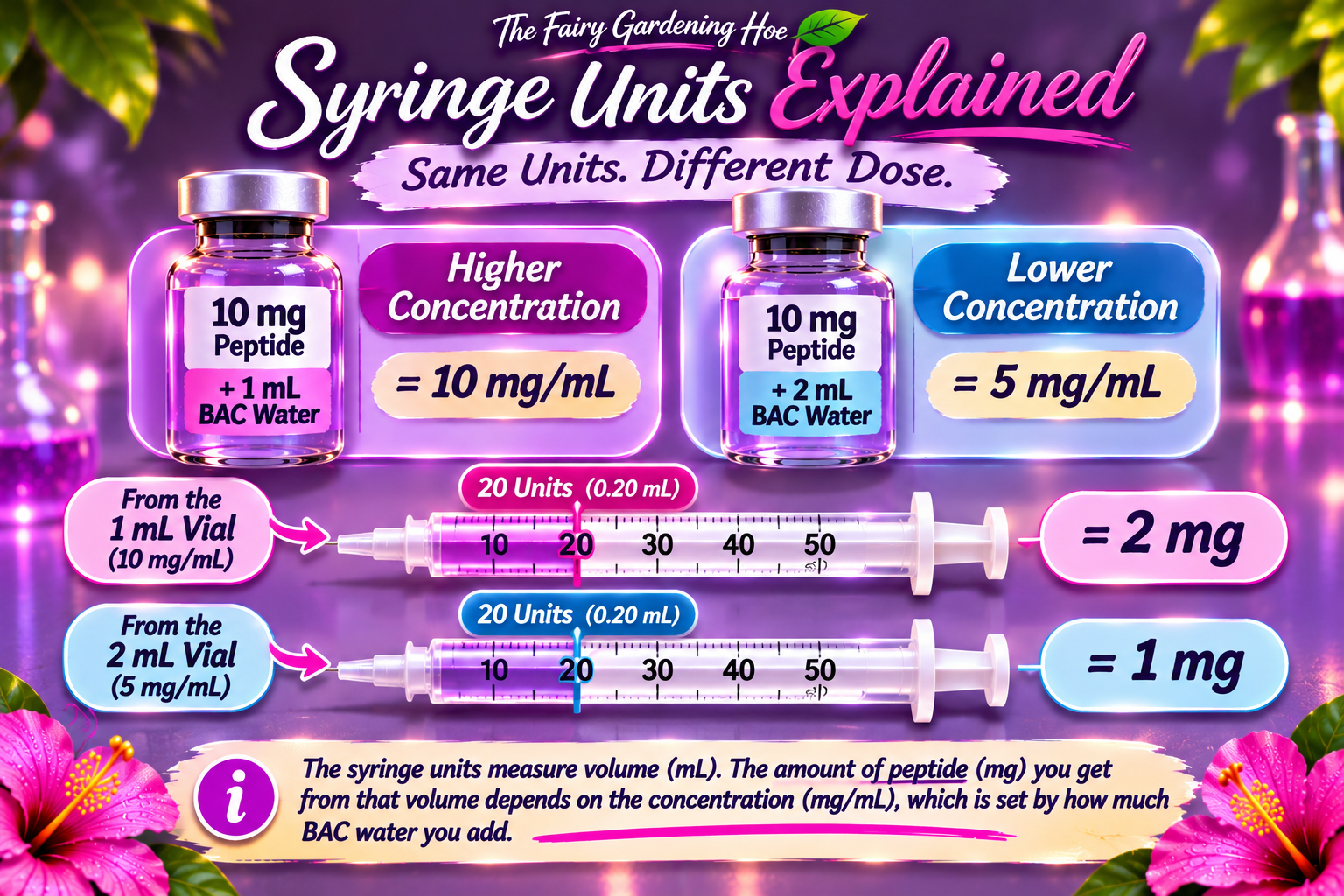
Same vial strength. Same 20 units of liquid. Different milligram amounts.
That’s why if someone says only “I pin 20 units,” you still don’t know the milligram amount. You need the concentration to interpret that volume. The calculation examples here are not instructions for drawing or injecting an actual product.
5. A Peptide Calculator That Makes the Math Easier to See
One resource I like for visualizing the numbers is the Prime Peptides Calculator. I especially like that it can show the number of theoretical doses available in a vial, not just a syringe volume.
You can explore how the math changes when you change the labeled vial strength, the amount per dose, or the volume of liquid in the example. It also displays a syringe illustration so the relationship between mL and U-100 units is easier to see.
Here’s another detail worth understanding: if a calculator says a vial contains 2.5 doses, that’s two complete doses and half the amount needed for another full dose. It doesn’t mean three complete doses.
One thing a calculator cannot tell you: whether a vial actually contains what its label claims, whether its contents are safe or appropriate, what administration schedule is right, or how long a prepared product remains usable. A calculator does math, not quality testing or medical evaluation. Linking to the calculator is not an endorsement of any products sold on that site.
The Easy Way to Remember 🦄
- Research protocol: The study plan: amount, frequency, and duration.
- Vial strength (mg): How much peptide is in the entire vial.
- Dose (mg): How much peptide is in one administration or “pin.”
- BAC water (mL): A diluent that changes the concentration when added in different volumes.
- Syringe units: Markings for liquid volume, not automatically the peptide dose in mg.
- Total peptide required: Amount per administration × number of planned administrations. This is the amount you compare against vial sizes.
If you remember one thing from this post, let it be this: milligrams measure how much peptide you have; milliliters and syringe units measure liquid. Those are not interchangeable.
Save This Beginner’s Guide for Later
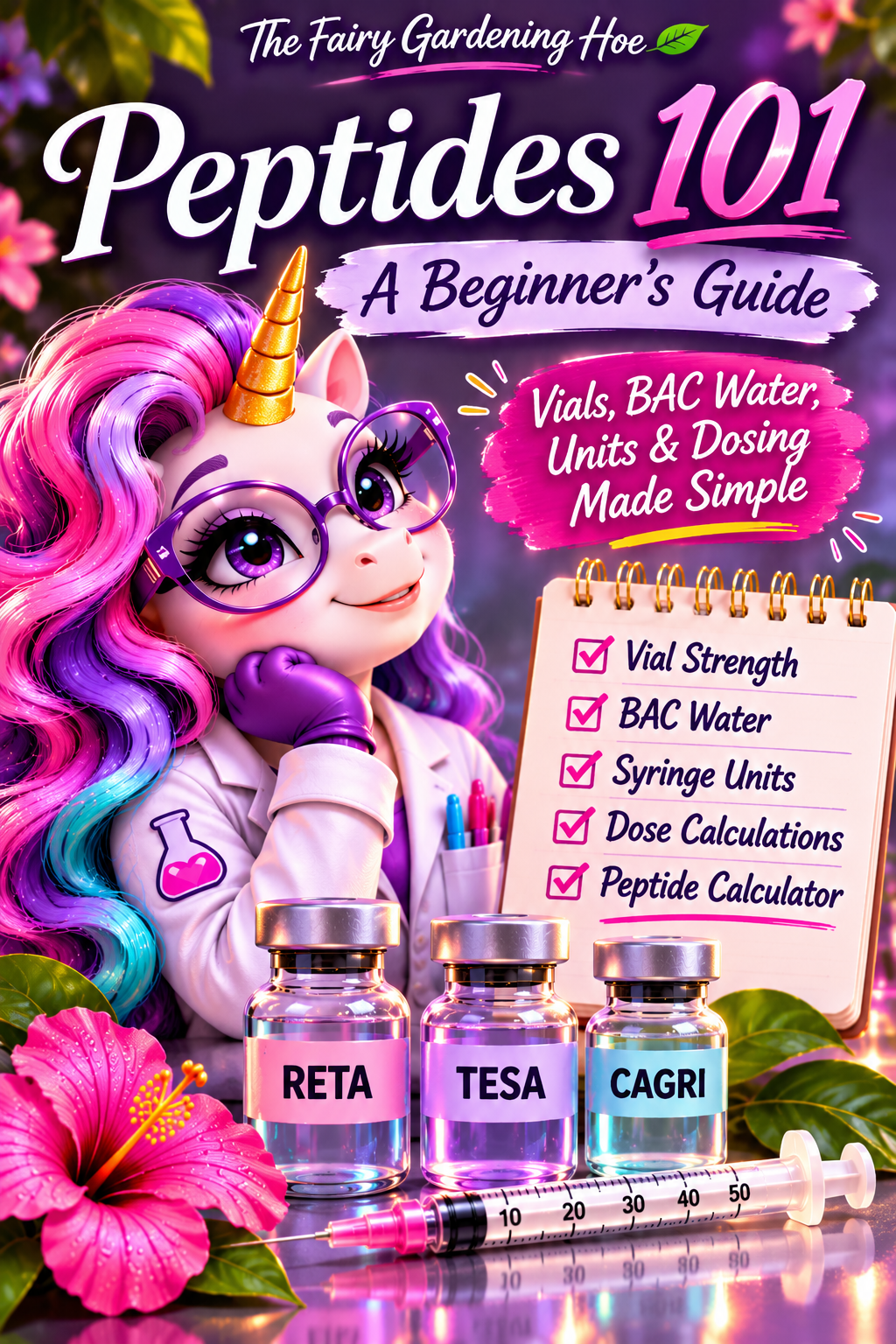
Want to revisit the math? Save the Pinterest graphic below so you can find the explanation again when you’re looking at a new vial label or trying to understand a calculator.
Final Thoughts
I wish these differences had been explained this simply when I was first learning. There is a big difference between memorizing a number from a calculator and actually understanding what that number represents. My hope is that this helps the math click for someone else, too.
Educational note: These are hypothetical quantity and concentration examples, not dosing, reconstitution, or injection instructions. Products labeled “Research Use Only” are not intended for human or veterinary administration.