This post contains affiliate links. If you purchase through one of my links, I may earn a small commission at no extra cost to you. As an Amazon Associate I earn from qualifying purchases.
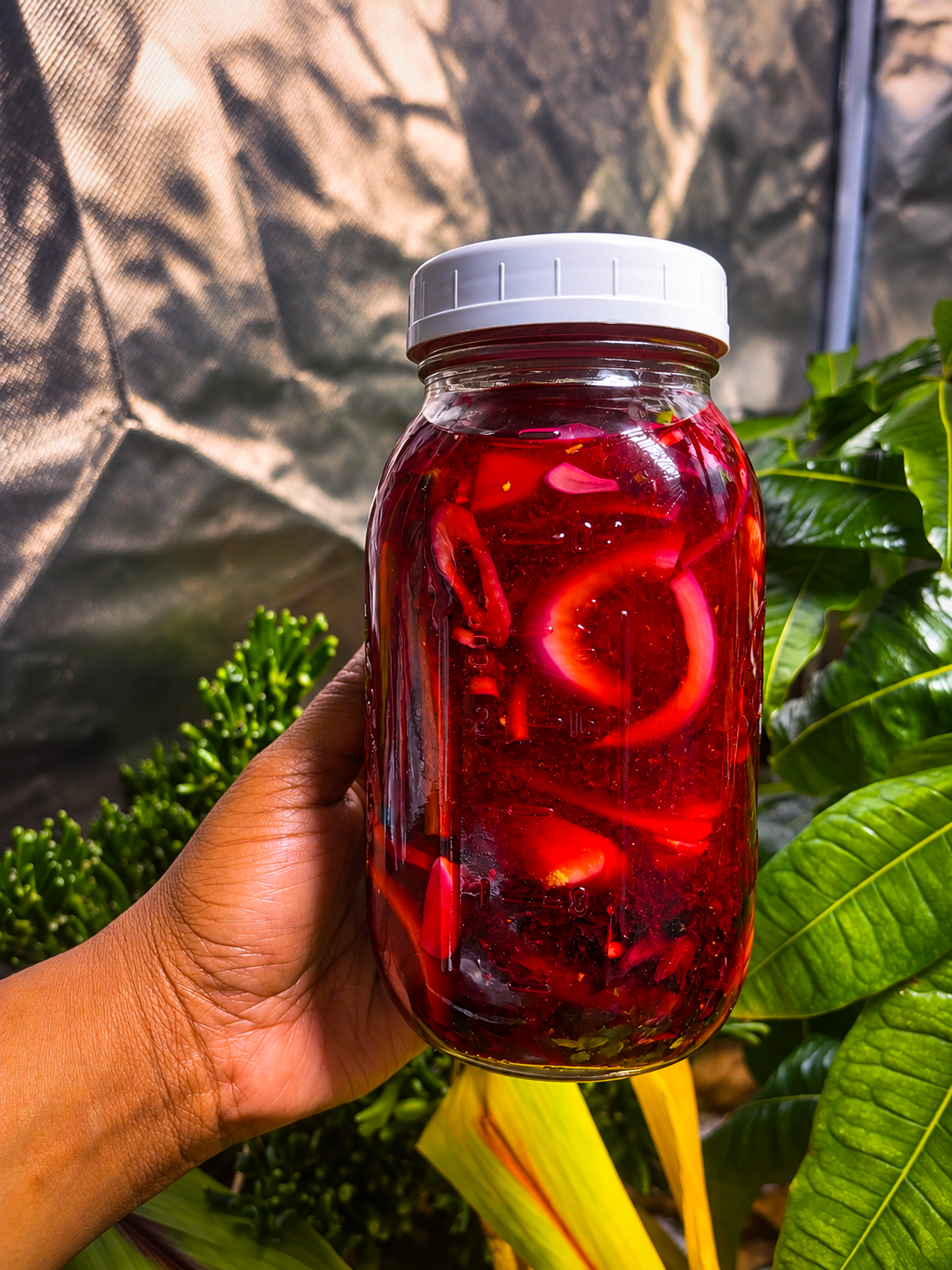
This hibiscus fire cider recipe might be one of the prettiest things I’ve ever stuffed into a mason jar. 😂🌺🔥
Fall is here, so I finally made something I’ve been wanting to make for a while: hibiscus fire cider. This hibiscus fire cider recipe keeps the warming, spicy, vinegary character I wanted, but makes it feel like me with Jamaican roselle hibiscus and a little peach cider vinegar.
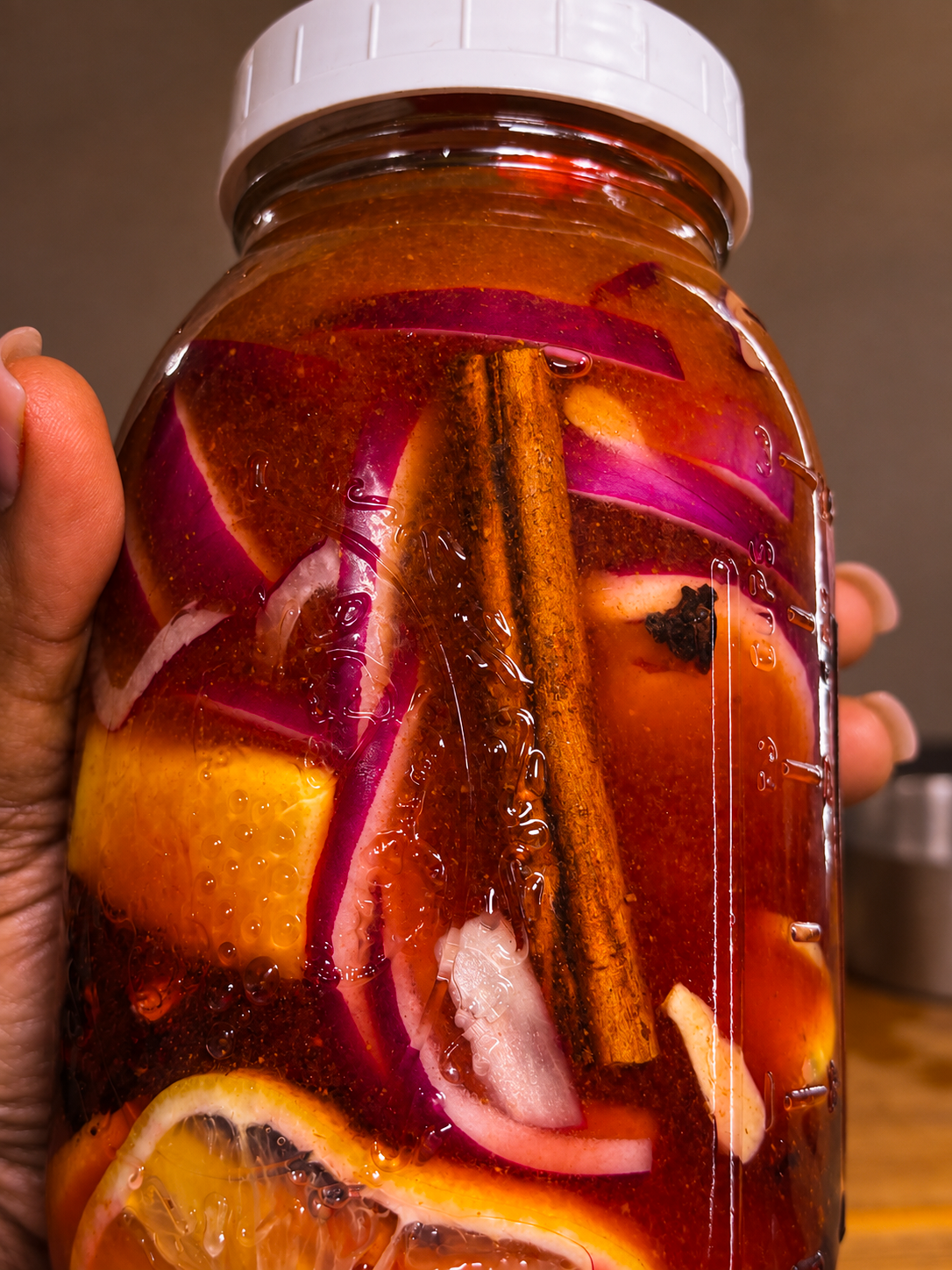
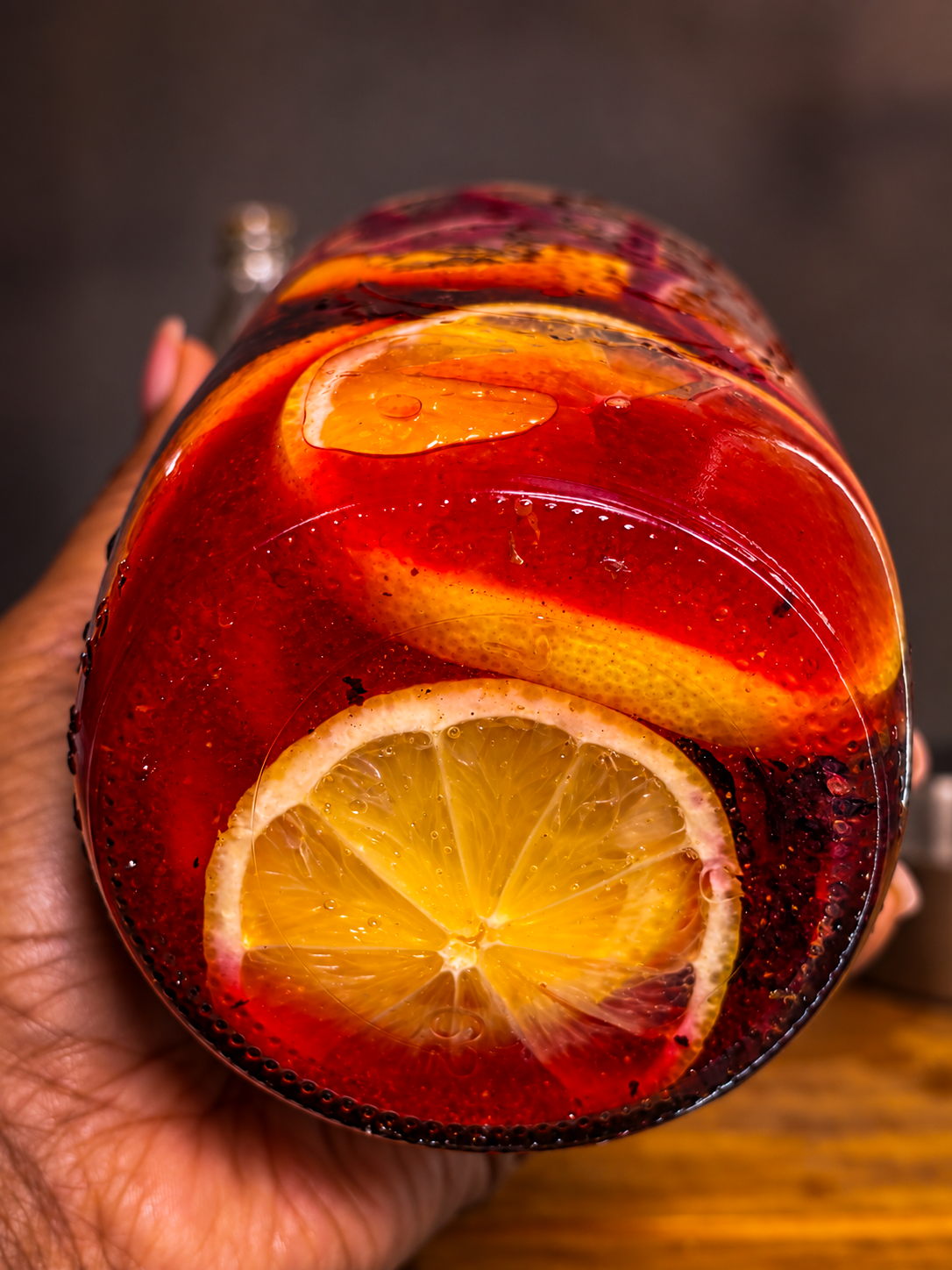
The result started changing color almost immediately. Within a few hours, the vinegar went from amber to pink and then into this deep ruby red. That color alone made me want to keep staring at the jar.
Watch Me Make My Hibiscus Fire Cider 🌺
If you’d rather watch the process first, I filmed the whole thing while making this batch with roselle from my garden. Watch it below, then come back here for the full ingredient list, measurements, notes and everything I learned along the way.
What Is Fire Cider?
Fire cider is an herbal vinegar infusion traditionally made with ingredients such as garlic, onion, ginger, hot peppers, citrus, roots, herbs, and spices. Everything sits in vinegar for a few weeks so the vinegar can extract flavor and plant compounds from the ingredients.
One thing that is worth clearing up: fire cider is an infusion, not a fermentation. I’m not trying to create bubbles or encourage microbial activity here. The vinegar is the extraction medium.
After the infusion period, I’ll strain everything out, press the solids well, and add local raw honey to taste. Then I plan to keep it refrigerated and use about a spoonful at a time as part of my fall and winter routine.
Why I Added Jamaican Roselle
Roselle, or hibiscus, was the ingredient I was most excited about. The dried calyces are naturally rich in anthocyanins, the red-purple plant pigments that give hibiscus its dramatic color, along with other polyphenols.
Hibiscus has been studied in people for cardiovascular markers, including blood pressure, with some research suggesting a modest lowering effect. That does not make my homemade vinegar infusion a treatment, and the amount of hibiscus compounds in a DIY batch like this is not standardized. I mainly love it here for the tart flavor and that gorgeous ruby color.
And because hibiscus is naturally tart and fruity, it made perfect sense with citrus and peach vinegar.
Why I Chose Each Ingredient
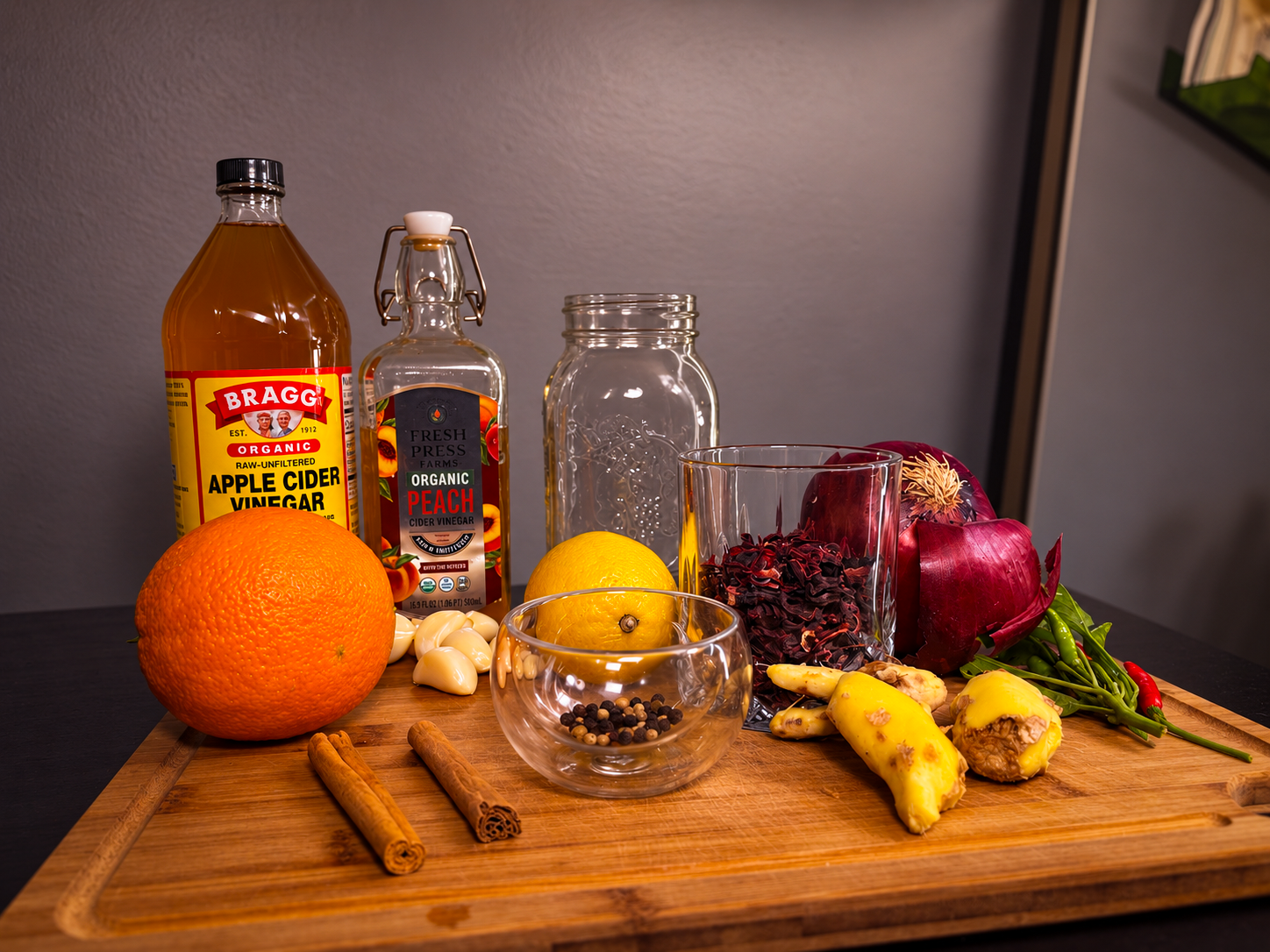
Fresh Ginger
Ginger brings that unmistakable warming bite. Its best-known compounds include gingerols and shogaols. Ginger has been studied for several types of nausea, although most of that research uses measured ginger products rather than a homemade vinegar infusion. In this jar, I mostly wanted the flavor and warmth.
Garlic
Fresh garlic was definitely going in. Crushing or chopping garlic helps form allicin and other sulfur compounds. Garlic has been studied for things like cholesterol and blood pressure, but the effects seen in research are generally modest, and evidence for preventing or treating colds is limited. Here, it earns its spot because that sharp garlic flavor belongs in fire cider.
Red Onion
Red onion brings sharp flavor, beautiful color, and plant compounds such as quercetin and sulfur-containing compounds. It also adds another layer of color to an already ridiculous-looking jar.
Thai Chiles
My Thai chiles came straight from my garden. They bring capsaicin, the compound responsible for the heat in hot peppers. So yes, they are absolutely putting the FIRE in this fire cider. 😂
Orange and Lemon
I used both orange and lemon for their bright citrus flavor, aroma, and citrus flavonoids. I am not counting on a homemade vinegar infusion as a meaningful source of vitamin C; I added the fruit because it rounds out the garlic, onion, ginger, peppers, and vinegar so the whole thing does not taste like one giant sharp note.
Blue Turmeric
I also added blue turmeric. Blue or black turmeric is used in traditional herbal practices, but human research is much more limited than it is for common turmeric, with much of the published work still coming from laboratory and animal studies. For this recipe, I think of it mainly as an earthy, aromatic ingredient rather than making big health claims about it.
Whole Black Pepper
Whole black pepper adds piperine, the main pungent compound black pepper is known for, plus another layer of warmth and spice.
Ceylon Cinnamon
I specifically used Ceylon cinnamon instead of the more common cassia cinnamon. Ceylon cinnamon typically contains much less coumarin. Cassia can contain considerably more, and frequent large amounts of coumarin can be a concern for the liver in sensitive people, so Ceylon made sense for something I may use regularly.
I also used a whole stick instead of ground cinnamon because sticks infuse cleanly and are much easier to strain later. Ground cinnamon can make the whole batch cloudy and gritty.
My Hibiscus Fire Cider Recipe
This made one very full 32-ounce mason jar.
- About 1/2 cup dried Jamaican roselle hibiscus. If you don’t grow your own roselle, this dried hibiscus from Amazon is an easy option.
- About 1/3 cup fresh ginger, sliced
- 1 piece blue turmeric, about 2 to 3 inches, sliced
- 6 garlic cloves, peeled and lightly crushed
- About 1/4 large red onion, sliced
- 2 to 3 Thai chiles
- 1/2 orange, thinly sliced
- 1/2 lemon, thinly sliced
- 1 Ceylon cinnamon stick
- About 1 teaspoon whole black peppercorns
- Raw, unfiltered apple cider vinegar with the mother, enough to fill the jar
- About 1/4 cup organic peach cider vinegar
- Local raw honey, added after straining
How I Made This Hibiscus Fire Cider Recipe
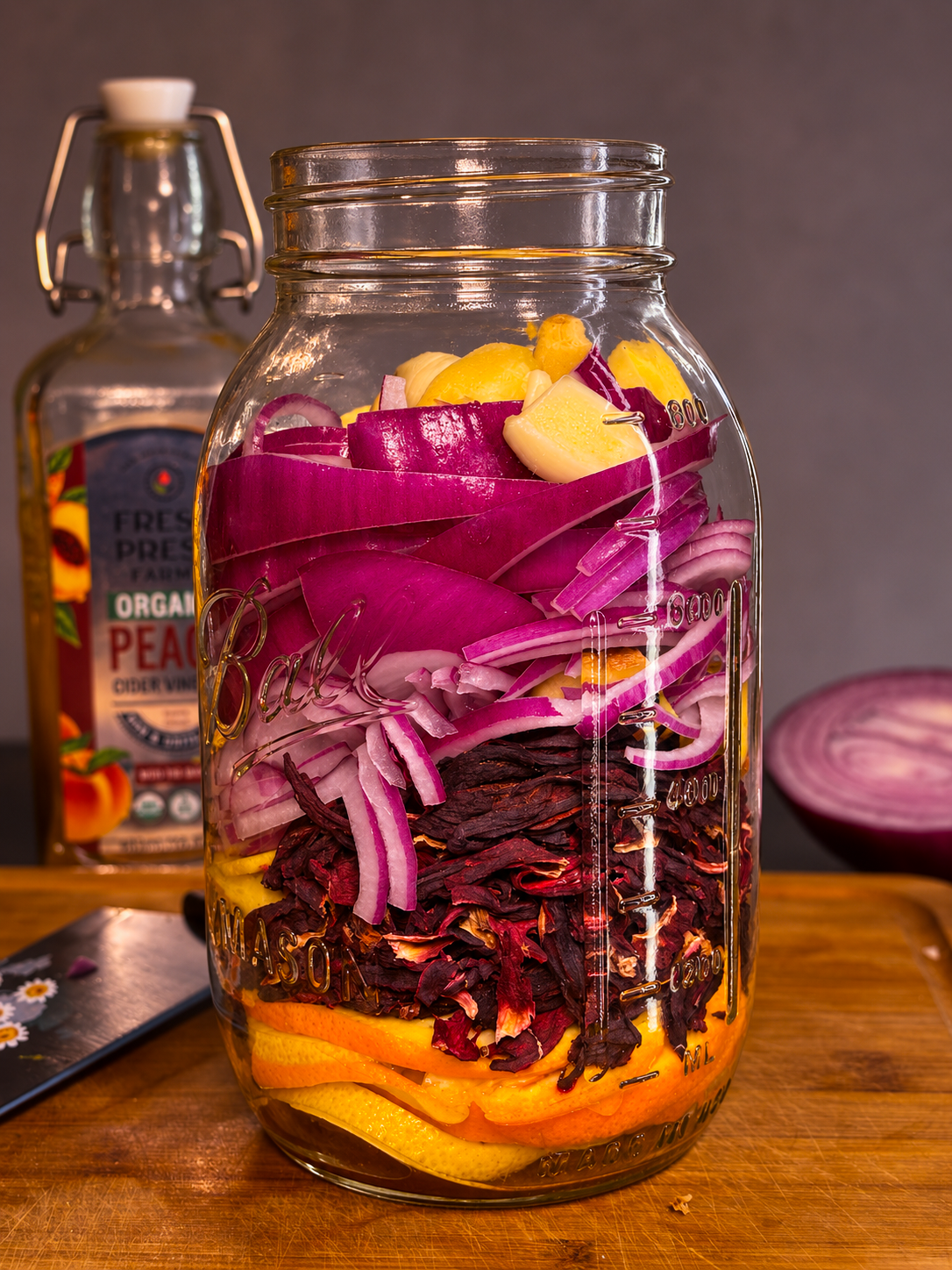
- Prep the ingredients. I sliced the ginger, blue turmeric, onion, orange, and lemon, peeled and lightly crushed the garlic, and gathered the roselle, Thai chiles, peppercorns, and cinnamon.
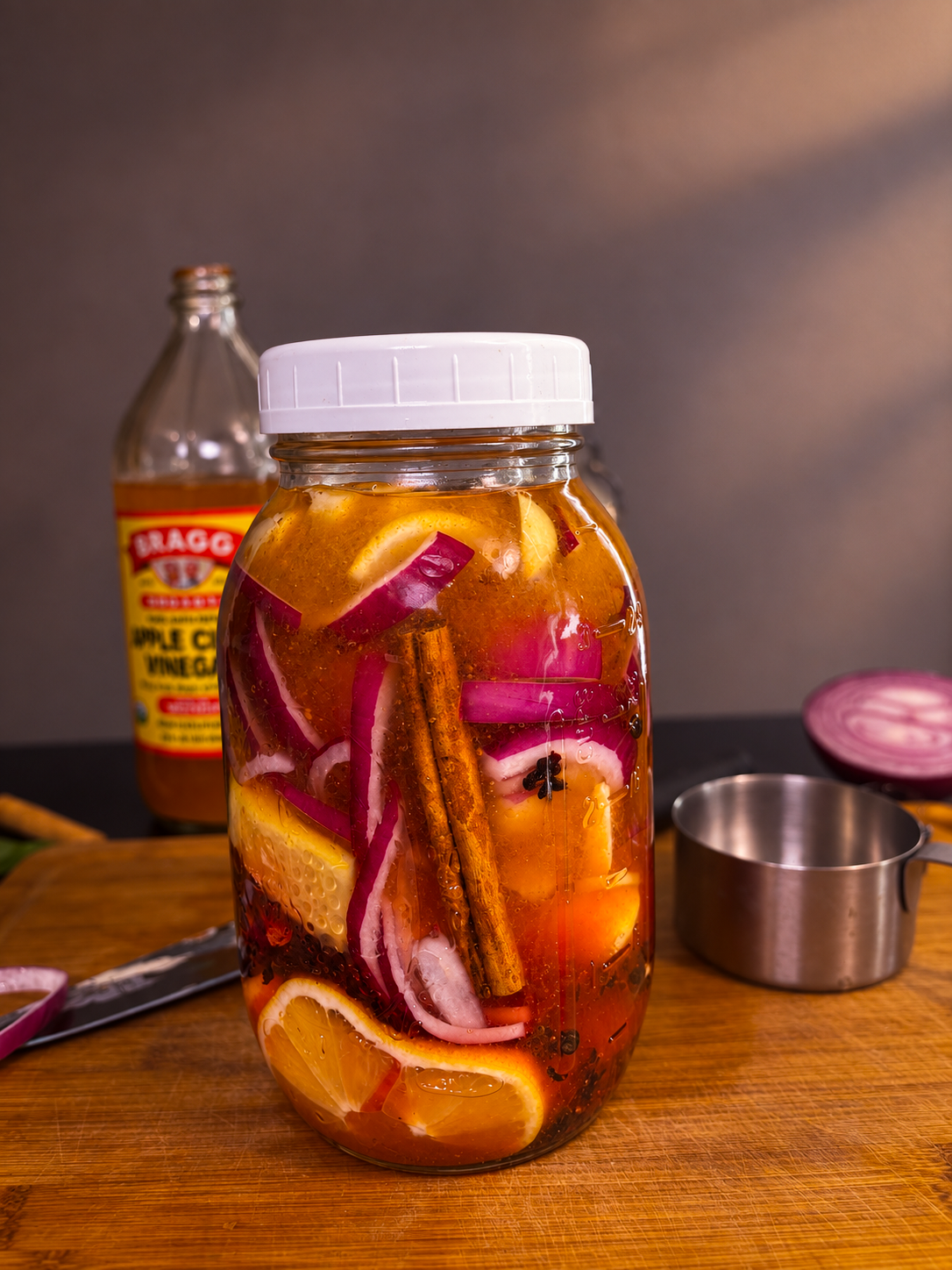
- Pack the jar. I layered everything into a clean 32-ounce mason jar. There is no magic order here. I mostly arranged it in a way that let me fit as much as possible while still leaving room for vinegar.
- Add the vinegar. I poured in mostly raw apple cider vinegar, then added a small amount of peach cider vinegar. I kept pouring until the ingredients were covered as completely as possible. Because vinegar is so acidic, I use a nonreactive lid and make sure the vinegar is not sitting against bare metal.
- Close and shake. Since ingredients naturally want to float, I plan to shake the jar regularly during the infusion so everything gets repeatedly coated in vinegar.
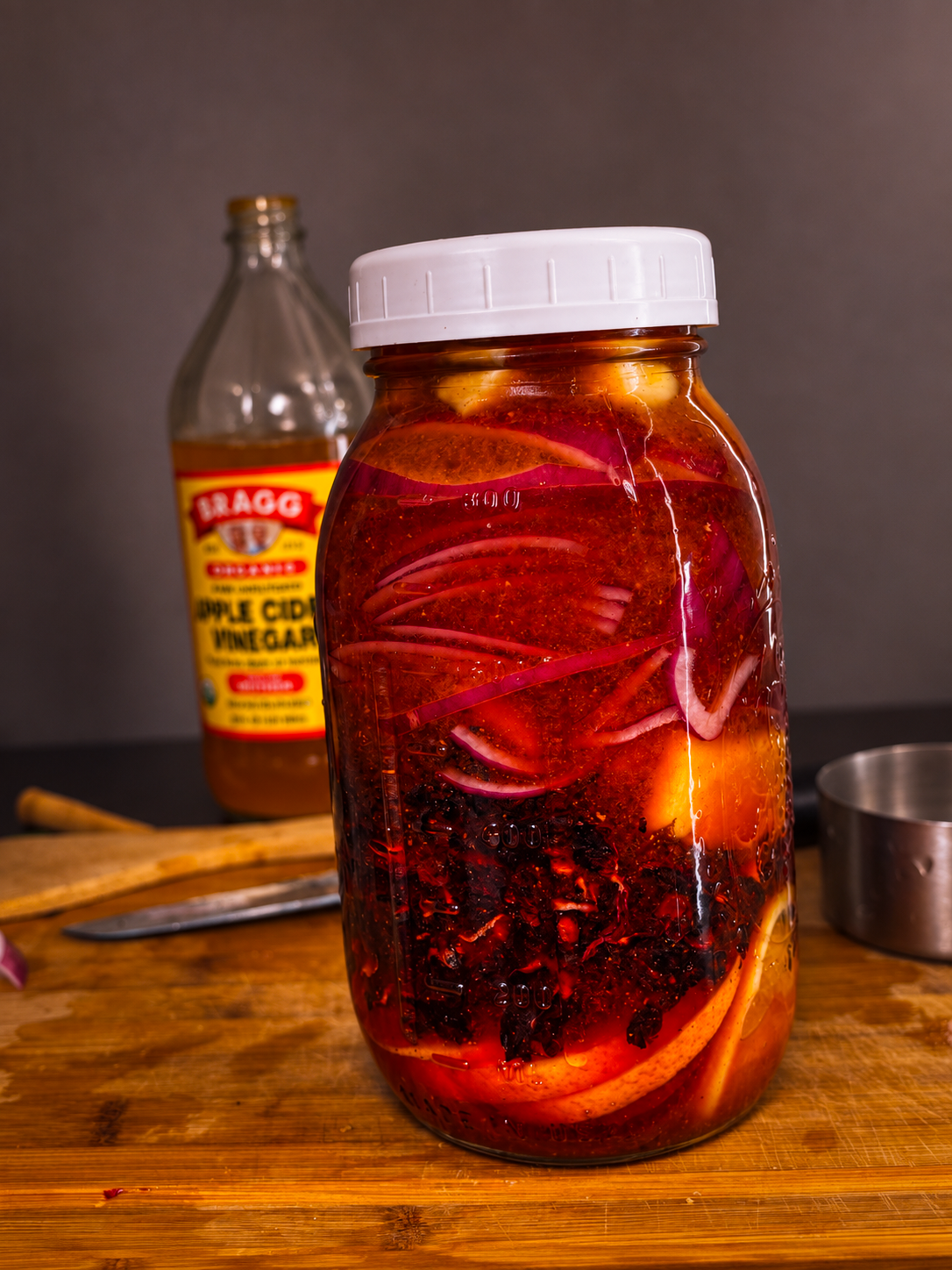
- Infuse. I’m letting this sit for about 3 to 4 weeks in a cool, dark place.
- Strain and sweeten. When it is finished, I’ll strain the solids out, press them well, and add local raw honey to taste.
- Refrigerate. After straining and sweetening, I’ll keep the finished fire cider in the refrigerator.
Why I Added Peach Cider Vinegar
This was purely because I could not stop thinking about how good peach + hibiscus + citrus sounded together. 😂
I still wanted raw apple cider vinegar to be the main base, so I only used a smaller amount of peach cider vinegar. I’m hoping it gives the finished cider a softer fruity note without taking away from the classic spicy fire-cider flavor.
Watching the Hibiscus Fire Cider Infuse
This was probably my favorite part. The vinegar started out amber, then the roselle began bleeding into it almost immediately. It became pink, then red, and within hours the whole jar had turned a deep jewel-toned ruby.
That transformation is exactly why I wanted plenty of photos for this batch. You can actually see the infusion happening through the color change.
How Long I’m Letting It Infuse
I’m aiming for about 3 to 4 weeks. During that time I’ll keep the jar in a cool, dark place and shake it regularly.
Because this is a vinegar infusion rather than a fermentation, I’m using a regular closed lid rather than an airlock.
How I Plan to Use It
Once it is strained and sweetened, I plan to keep it in the refrigerator and take roughly a spoonful as part of my fall and winter routine. I may also dilute it in a little water depending on how fiery the finished batch turns out.
I’ll update this post after the infusion is finished because I really want to see what the final flavor does after the ginger, Thai chiles, hibiscus, citrus, cinnamon, and peach vinegar have had a few weeks together.
I’m also already thinking about making a second batch with a small sprig of rosemary so I can compare the two.
A Quick Note on the Research
I love learning what is actually known about the ingredients I use, but I do not treat a homemade herbal vinegar like a standardized supplement or medicine. Studies on hibiscus, ginger, garlic, and other herbs often use teas, extracts, supplements, or measured doses, so those results cannot automatically be applied to this mason jar.
This is also a very acidic, spicy preparation. I plan to use a small amount and dilute it if I want to. If you are pregnant, take prescription medicines—especially blood thinners or blood-pressure medicines—or have a medical condition, it is worth checking with your healthcare professional before making concentrated herbal preparations part of your routine.
Research I used while fact-checking this post: hibiscus and blood pressure, ginger, garlic, and coumarin in cinnamon.
Final Thoughts
This is exactly the kind of project I love: something useful, beautiful, a little experimental, and full of ingredients I actually enjoy growing and using.
The Jamaican roselle completely changed the personality of the jar, and if the finished flavor is anywhere near as good as the color looks, this one is going into my regular fall rotation.